Brentwood Dirt Works · Brentwood, TN
Grading and building pads
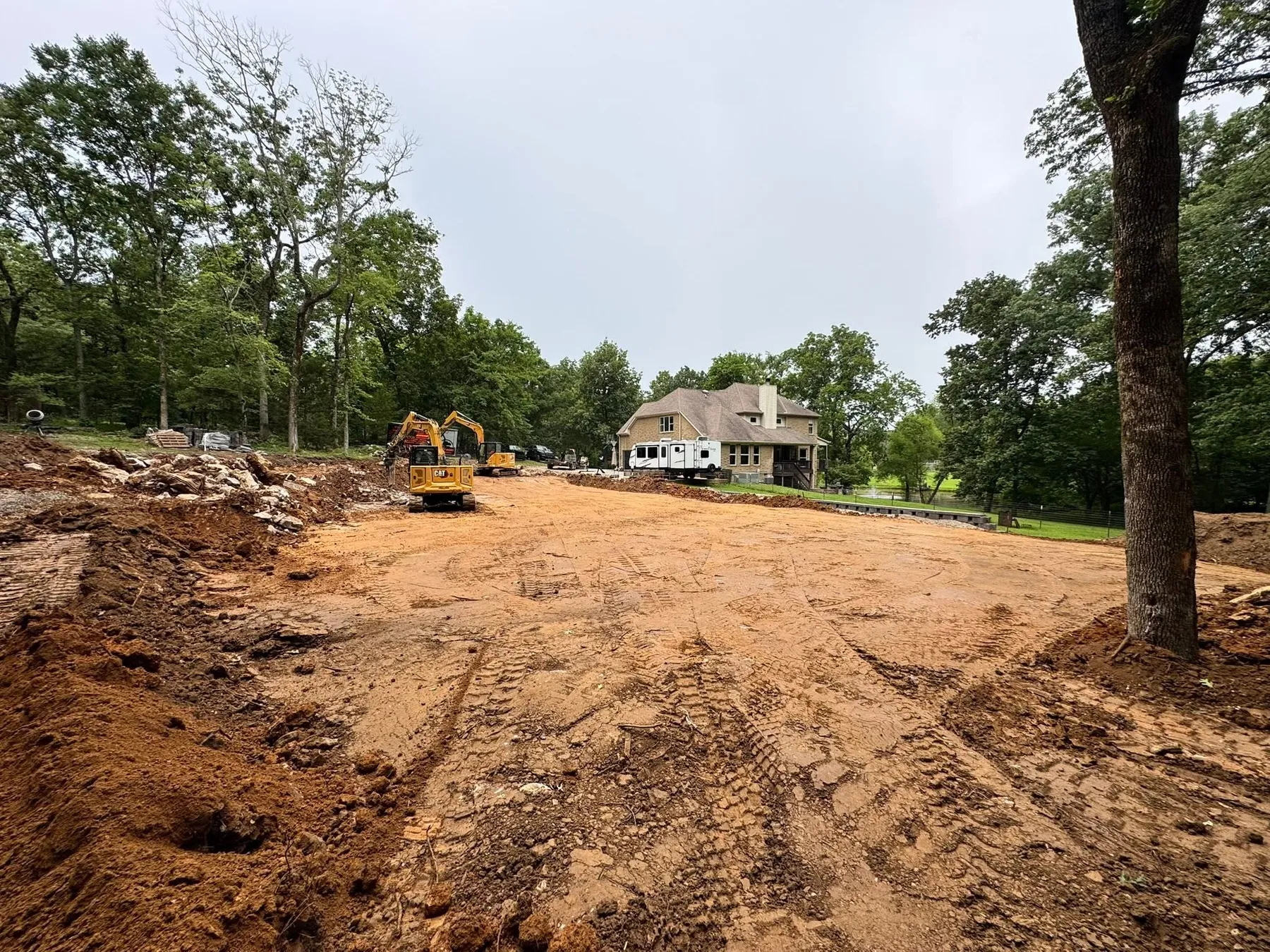
House pads, barn pads, parking areas and yards, brought to grade with laser-controlled equipment and compacted in lifts.
What goes into a building pad that stays level?
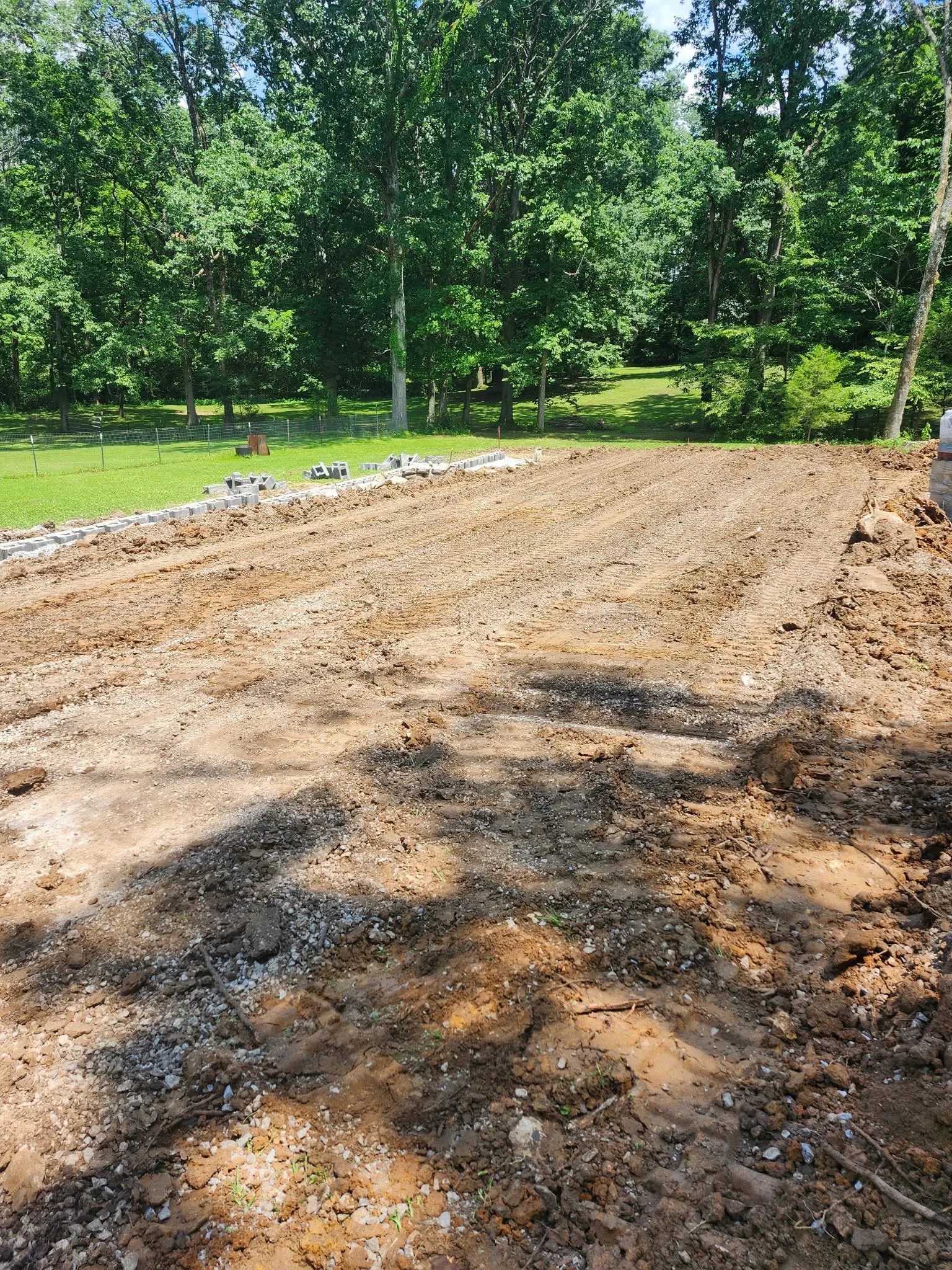
Compaction, in layers, with the grade checked as it comes up. We built one 120×60 pad with sloped sides by cutting and filling the land to a level surface, and every bit of that cut and fill went in as 1-foot lifts rolled in to hold the slope. Thicker lifts go in faster, and they settle later under the slab.
We keep the numbers honest with rotary lasers and digital levels, and the finish pass runs on laser control. In our own words, that’s “laser-controlled precision grading to get your project built to the correct elevations and slopes from the start.”
Rough grading, finish grading, or both?
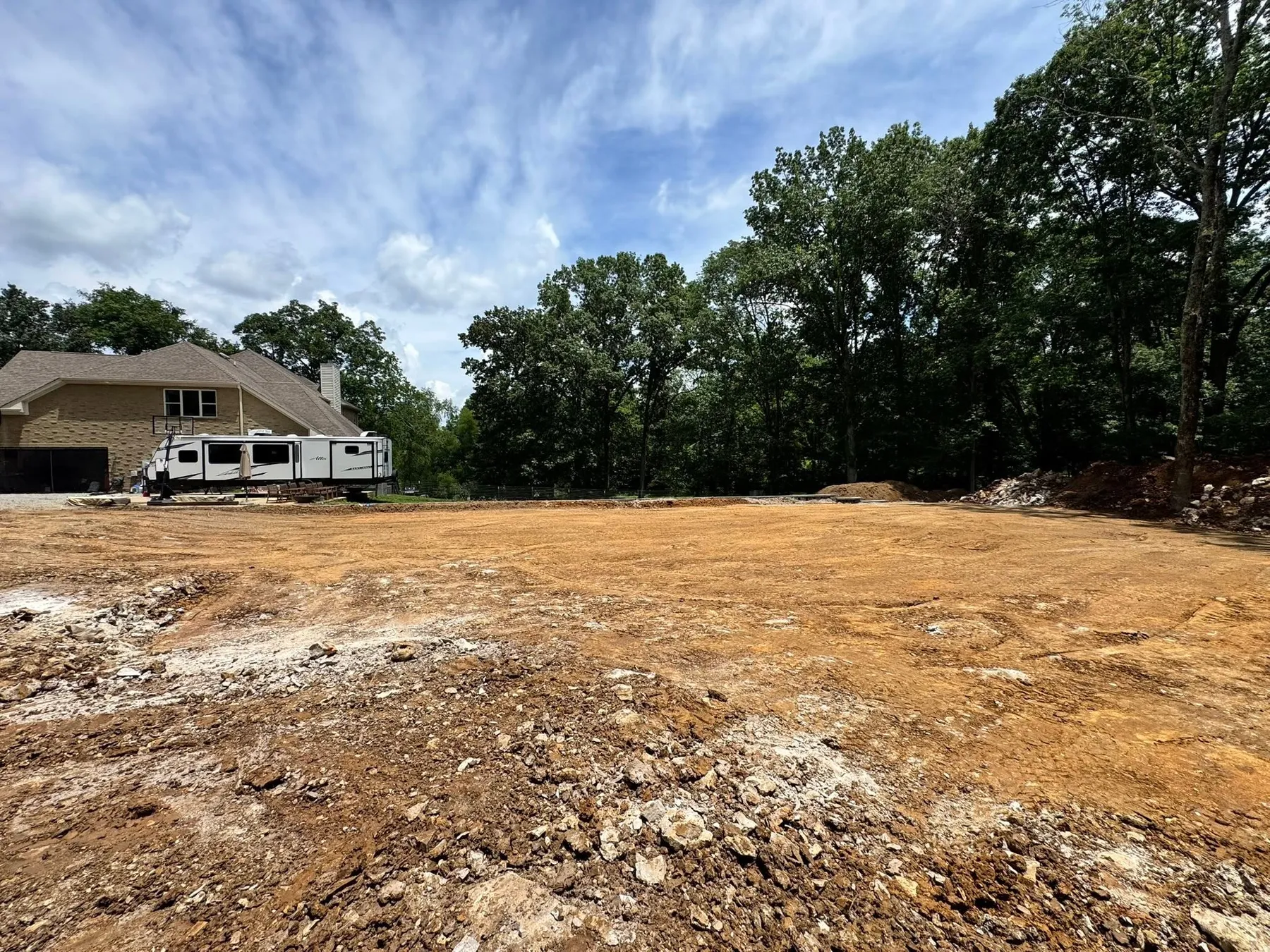
Most jobs want both, and we do both. Rough grading moves the volume: the hillside comes down, the low corner comes up. Finish grading trims that to the exact elevation and sets the slopes that move water away from what you’re building. You might only need the second half if a builder or another crew already roughed it in.
The list of what we bring to grade is short: building pads, barn pads, driveways, parking areas and commercial sites. We also regrade established yards, where the problem is usually water sitting against the house or a lawn too uneven to mow.
“They transformed a rough, uneven area into a perfectly graded, rock-solid pad that was ready for construction.”
What can slow a grading job down?
Rock is the big one. Laura R.’s barn site sat roughly 5 feet out of grade with a substantial amount of it, and it had to be hammered out and moved before the pad could come up. Buried brick and old construction debris are the other surprise: we’ve dug them up on lots where a house went in years before, and they change the cleanup as well as the grading.
Paperwork is the third. A Brentwood lot may need a Chapter 56 grading permit, Franklin caps cut and fill slopes at 3:1, and the state’s construction permit starts at 1 acre. See the town-by-town notes before you set a start date.
Answers
Grading and Building Pads: common questions
How do you grade a house pad?
We shoot the existing grade, cut the high side, and fill the low side in lifts of 1 foot, rolling each lift in before the next goes down. Laser-controlled grading then brings the surface to the elevations and slopes on the plan, so the builder starts on a level, compacted pad.
How much does land grading cost?
It depends on how far the site sits from grade, how much rock is in it, and whether material has to come in or go out. We have no flat rate, because a pad 5 feet out of grade with rock is a different job from a yard that needs a few inches. Estimates are free.
Rough grading or finish grading: which one does my lot need?
Rough grading moves the bulk of the dirt and gets a site close to elevation. Finish grading trims that surface to the final elevations and slopes. We do both, using rotary lasers and digital levels to check the numbers as the work goes.
Can you level a sloped yard for a barn?
Yes, barn pads are regular work for us. One customer’s site in a yard was roughly 5 feet out of grade with a substantial amount of rock to hammer out and move. We turned it into a graded, compacted pad that was ready for the barn build to start.
Do I need a permit to grade my property in Tennessee?
Often, and the trigger depends on the town. Williamson County wants a Land Disturbance Permit above 1 acre. The City of Brentwood requires a grading permit unless a single-family lot on grades under 15% qualifies for its exemption. The state adds its own construction permit at 1 acre.
Do you do driveway grading?
Yes. Getting a driveway or parking area to grade is the same work as a pad, on a narrower footprint: cut, fill, compact, and shape it so water runs off. Franklin caps single-family driveways at a 14% slope, so the town’s number can decide the layout.