
Brentwood Dirt Works · Brentwood, TN
Retaining walls
Block and stone, residential and commercial. Built new, or built to replace one that’s leaning, separating or already down.
What goes into a retaining wall that holds?
More below ground and behind the block than you’ll ever see. Our list runs in this order:
- Excavation
- Compacted base
- Drainage
- Stone backfill
- Reinforcement
- Final grading
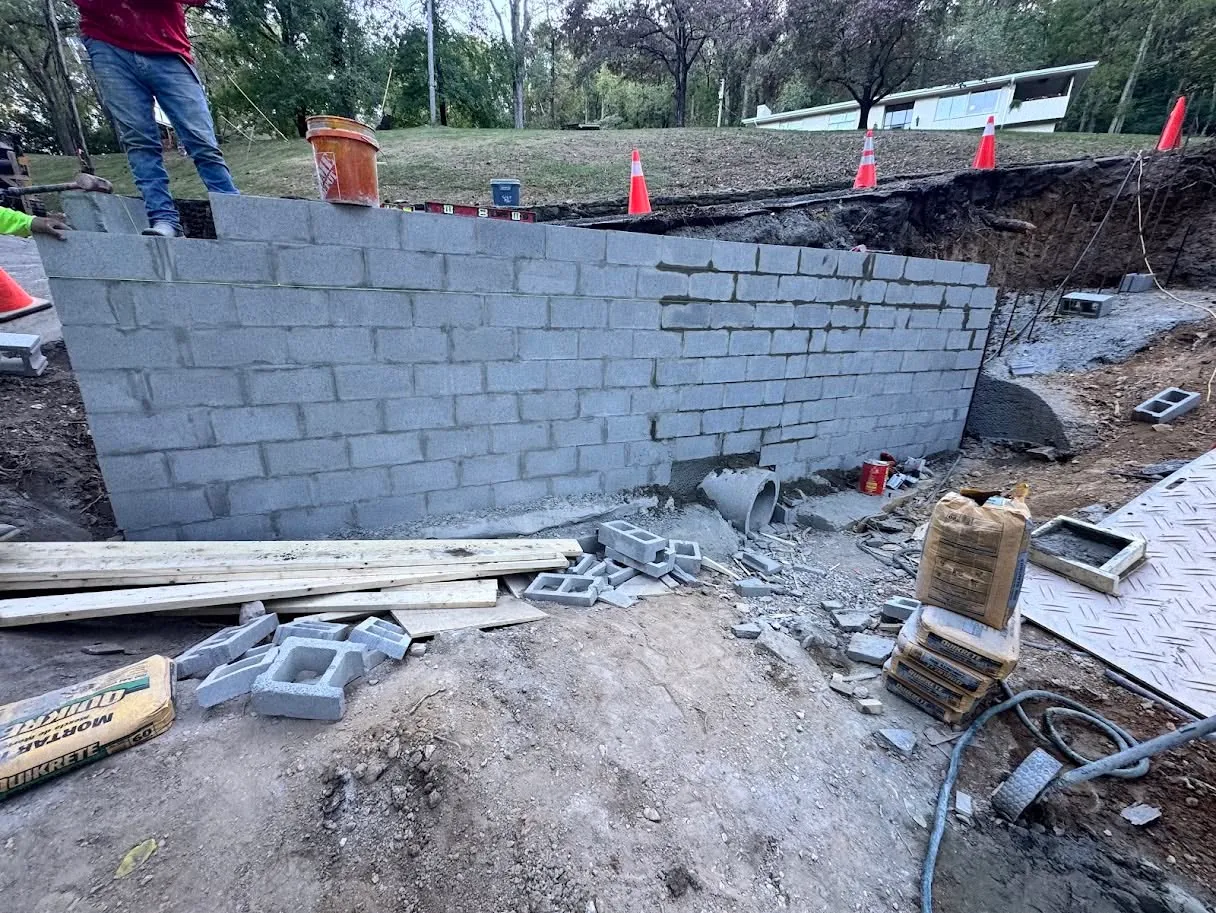
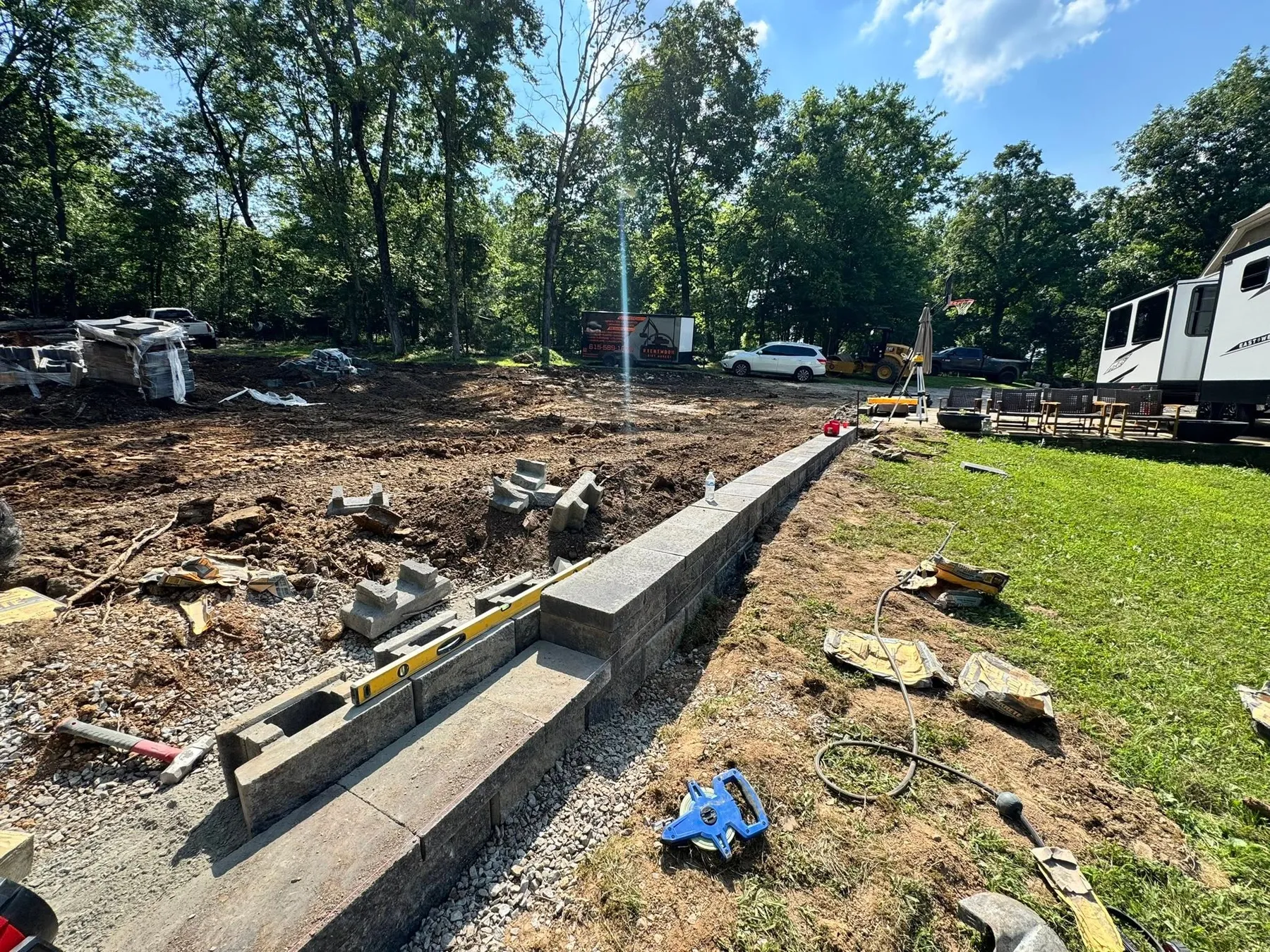
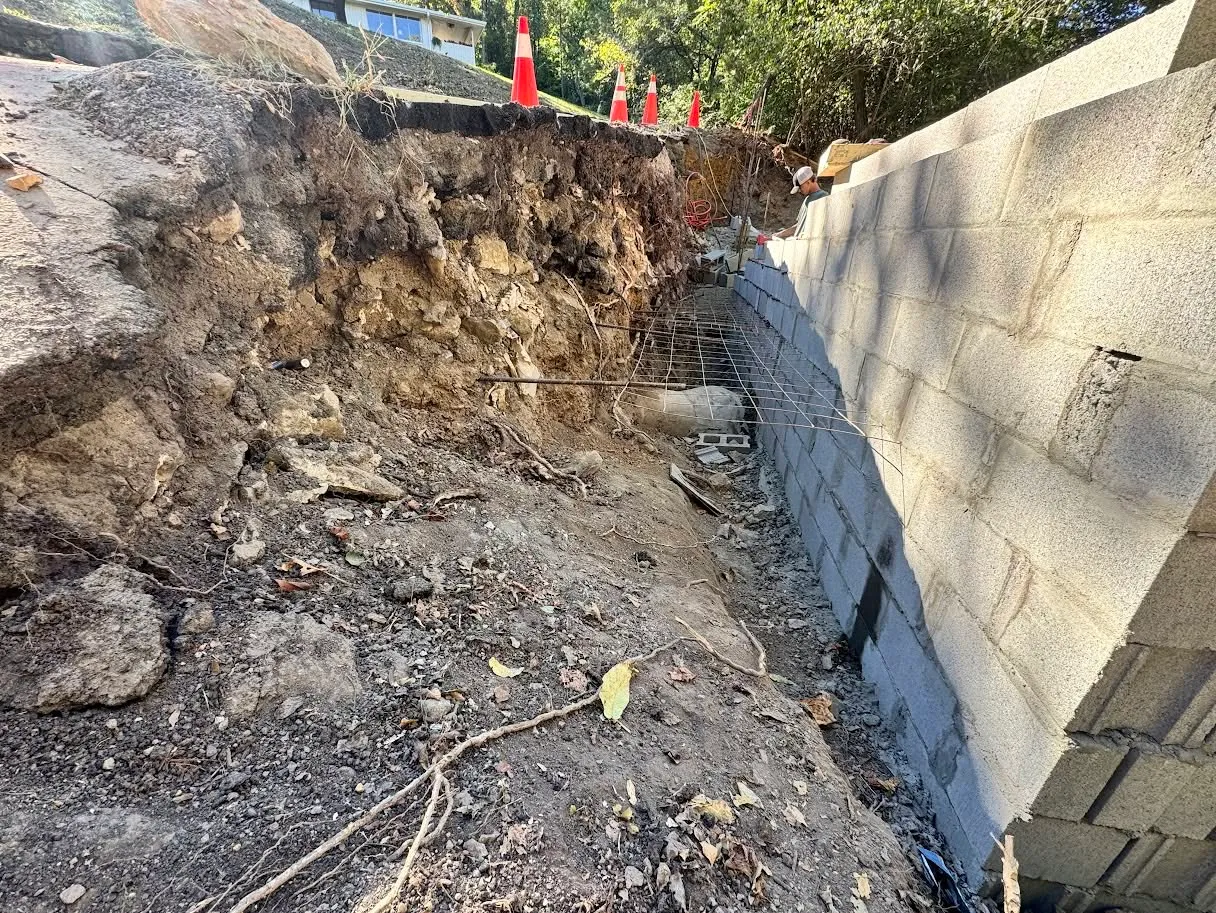
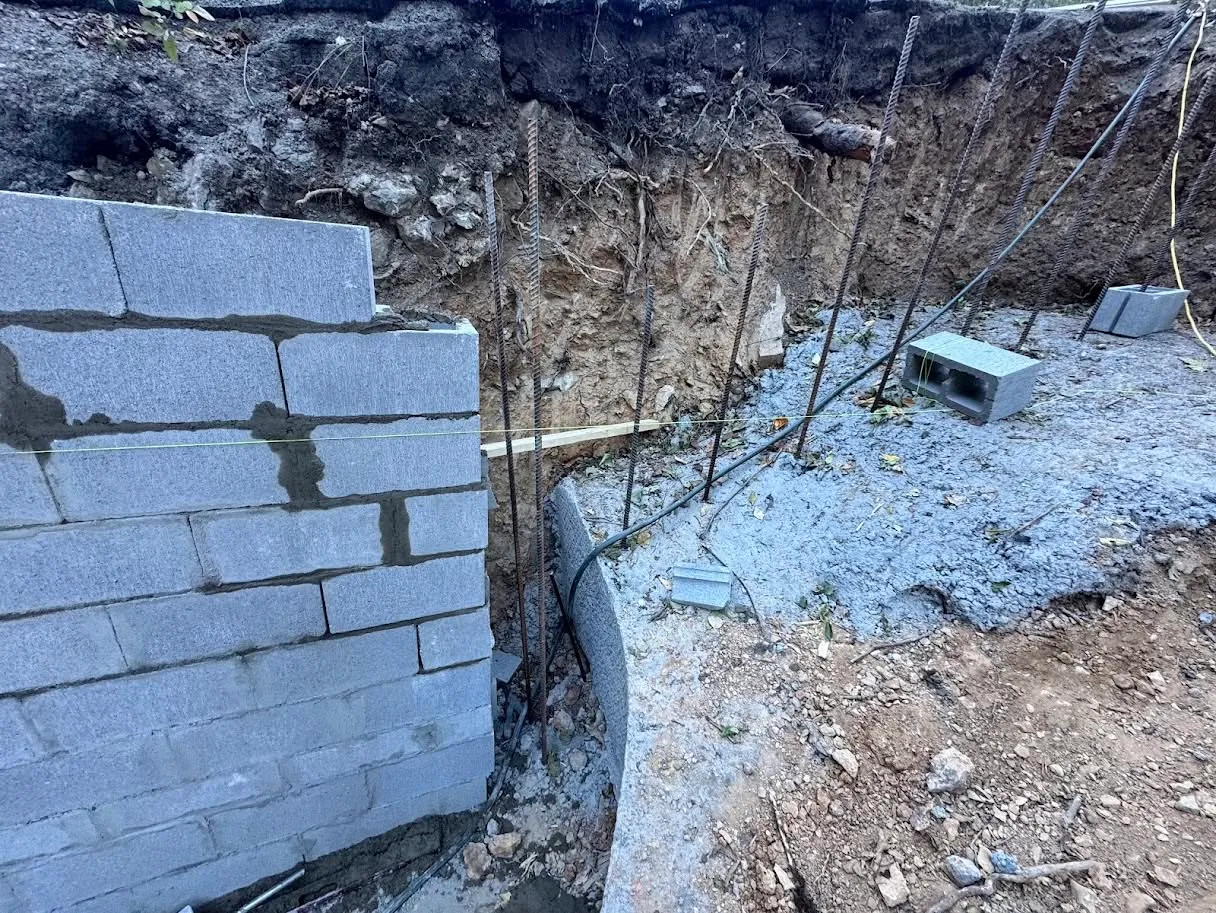
Skip one and the wall can still look right for a season or two. These photos are all from our own jobs, and they show the stages most people never see once the backfill is in.
My wall is leaning. Can it be saved?
Sometimes a short section can be rebuilt, but a wall leaning along its length usually needs to come down, since what failed is behind it. Leaning, separating and collapsing walls are what we mostly get called about, and the advice on our own post is blunt: “Don’t wait until it gets worse.” Send a picture from the end of the wall, looking down its length, so the lean shows.
Block or stone?
Both work, and the site usually decides. Our photos show concrete block with rebar against deep cuts, where the wall has serious weight to hold, and segmental block along the edges of building pads and in terraced yards, where it has to look finished. We also do hardscape around them.
Do retaining walls need a permit?
Often, but we won’t quote a height from memory, because the number depends on the town and on what’s above the wall. Ask the building office where your property sits, or ask us to check when we come out. The grading that goes with a wall can also trigger a permit on its own: a Forest Hills land disturbance permit starts at just 2,500 square feet. We’ve built walls and drainage out in College Grove, under Williamson County’s rules.
Answers
Retaining Walls: common questions
How much do retaining walls cost?
We price walls by height, length, material and access, and the part you won’t see costs real money: excavation, compacted base, drainage, stone backfill and reinforcement. A replacement also has the old wall to remove. Send a picture and the rough dimensions, and the estimate is free.
How long will a retaining wall last without drainage?
Not long enough to be worth building. Water behind a wall adds pressure that the block was never meant to hold, and that’s the usual story when a wall leans or separates. Every wall we build gets drainage and stone backfill behind it, whichever material it’s made of.
What causes a retaining wall to lean?
Pressure behind the wall that it can’t hold, most often from water with no way out, a base that wasn’t compacted, or missing reinforcement. Leaning, separating and collapsing walls are what we get called to replace. Don’t wait until it gets worse, because a failing wall usually moves further.
Do you build block and stone retaining walls?
Yes, both, for residential and commercial sites. The order stays the same on either: excavation, compacted base, drainage, stone backfill, reinforcement and final grading. Our photos show concrete block with rebar on deep cuts, and segmental block along pads and in terraced yards.
Do you repair retaining walls or only replace them?
We build new walls and replace failed ones, and we’ll tell you which yours needs after we see it. A wall that’s leaning because nothing drains behind it often can’t be patched from the front, since the problem is behind the block. A picture of the lean helps.
Do you do retaining walls in College Grove?
Yes, we’ve built retaining walls with drainage in College Grove. It’s 18 miles from our Brentwood base and in unincorporated Williamson County, where more than 1 acre of disturbance brings the county’s Land Disturbance Permit. Call (615) 569-1679 or send a picture of the slope.