
Brentwood Dirt Works · Brentwood, TN
Utility trenching
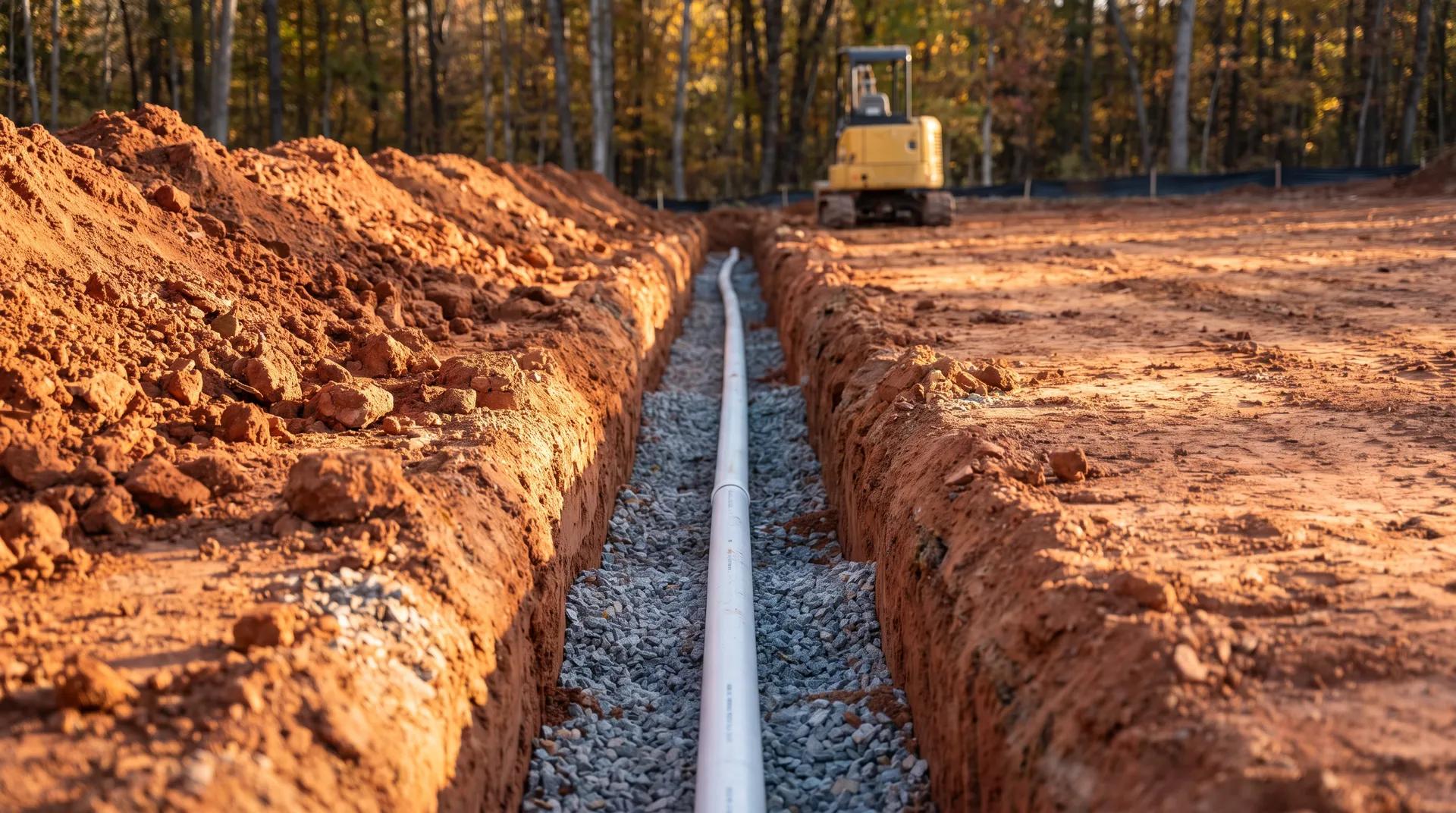
Trenches for sewer, water, electrical and plumbing lines, on house lots and commercial sites, with the fall checked by pipe laser.
What lines do you trench for?
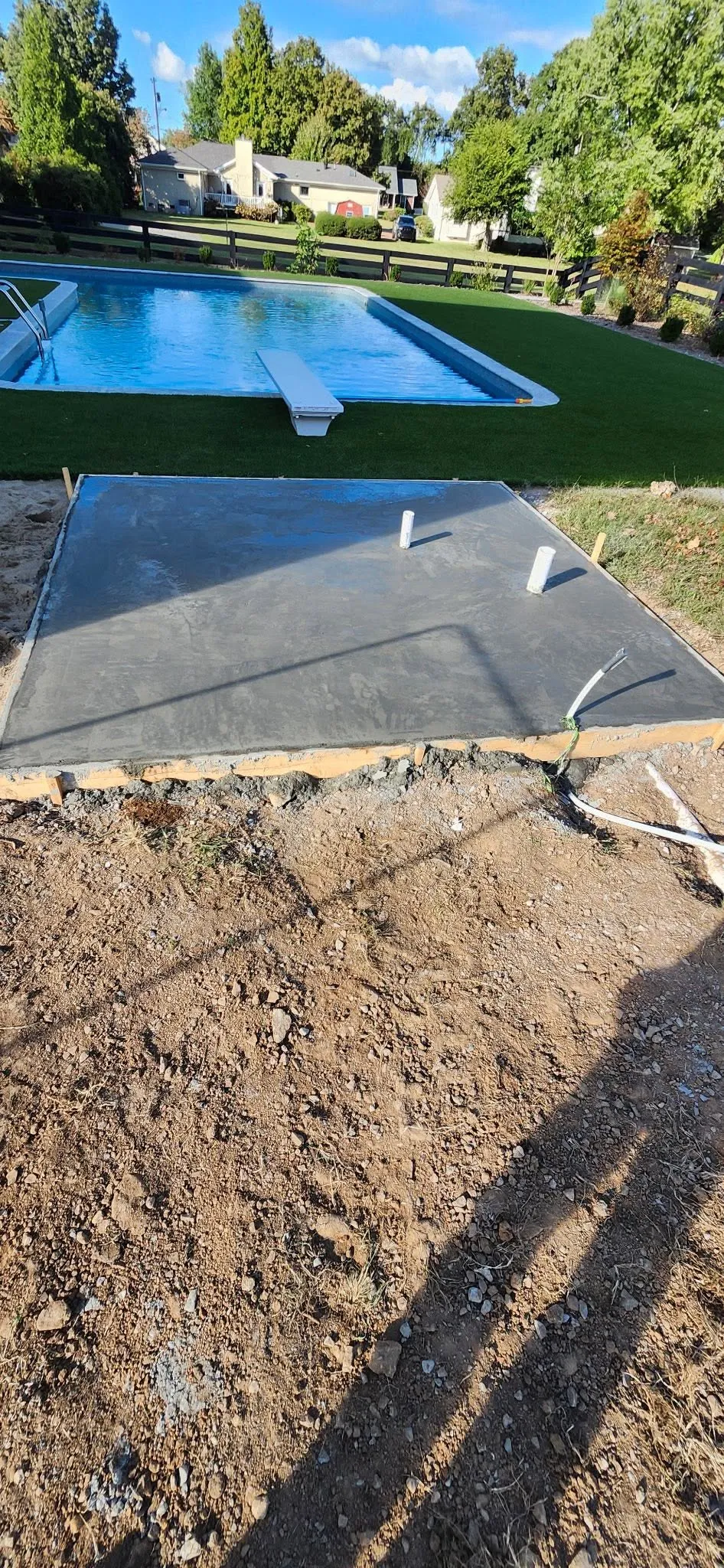
Sewer, water, electrical and plumbing, plus the underground utilities on a commercial site. We’ve also installed grease traps and water filtration systems, which need the same digging and bedding, and exterior utilities are on our residential flyer. If there’s a plumber or electrician making the connection, we can dig to their mark and backfill behind them.
Why use a pipe laser?
A gravity line depends entirely on its fall. A sewer run that looks fine and loses its slope halfway holds water and solids at the low spot, and nobody finds out until the line backs up. Pipe lasers set that fall as the trench goes in, and digital levels check the bedding before the pipe goes down. The rotary laser that grades your pad does a different job, and we carry both.
What happens before we dig?
A Tennessee 811 ticket, with at least 3 working days’ notice. Once the marks are down, there’s a tolerance zone of the line’s width plus 2 feet on each side where machines give way to careful hand work. The notification buffer changed on October 1, 2026, from about 343 feet to 200 feet, so the area around an old ticket may not match what’s called in now. We carry GPS locators for what the marks don’t cover, like private lines the utility doesn’t know about.
What about the rock?
You should expect some. Limestone runs close to the surface in much of Middle Tennessee, so a trench that starts in clay can run into a ledge a few feet along. It gets hammered through, and we’ll tell you when that happens, since it changes how long the trench takes. Rock also can’t go straight back around a pipe, which is why bedding stone and clean backfill are part of the price.
Trenching often comes along with other work, such as excavation on a new lot, a drainage run to daylight, or demolition where old services have to be capped first. Doing them together means one crew and one ticket.
Answers
Utility Trenching: common questions
How much does utility trenching cost?
Trenching is priced by length, depth, what’s in the way and what goes in the trench. Rock and existing lines move the number the most. We don’t publish a per-foot rate; describe the run, send a picture from one end, and we’ll give you a free estimate.
How deep are utility lines usually buried?
Depth varies by utility and by who installed it, so nobody should dig on an assumption. In Tennessee the tolerance zone is the width of the line plus 2 feet each side, and 811 needs at least 3 working days’ notice. We also bring GPS locators to the site.
What utilities do you trench for?
Sewer, water, electrical and plumbing lines, on residential and commercial sites. We’ve also installed grease traps and water filtration systems. Pipe lasers set the fall on gravity lines, which matters most on sewer, where a run with the wrong slope holds water instead of carrying it.
Do I have to call 811 before trenching in my yard?
Yes. Tennessee law requires at least 3 working days’ notice before digging, weekends and holidays not counted. The ticket stays valid for 15 calendar days after its start date. When we’re doing the digging, we call it in, and nothing breaks ground until the locates are done.
Did the Tennessee 811 rules change in 2026?
One did. On October 1, 2026, the ticket notification buffer went from about 343 feet to 200 feet. The 3-working-day notice and the tolerance zone of 2 feet on either side of a line stayed the same, according to Tennessee 811’s own excavator pages.